THE UNITED STATES OF AMERICA
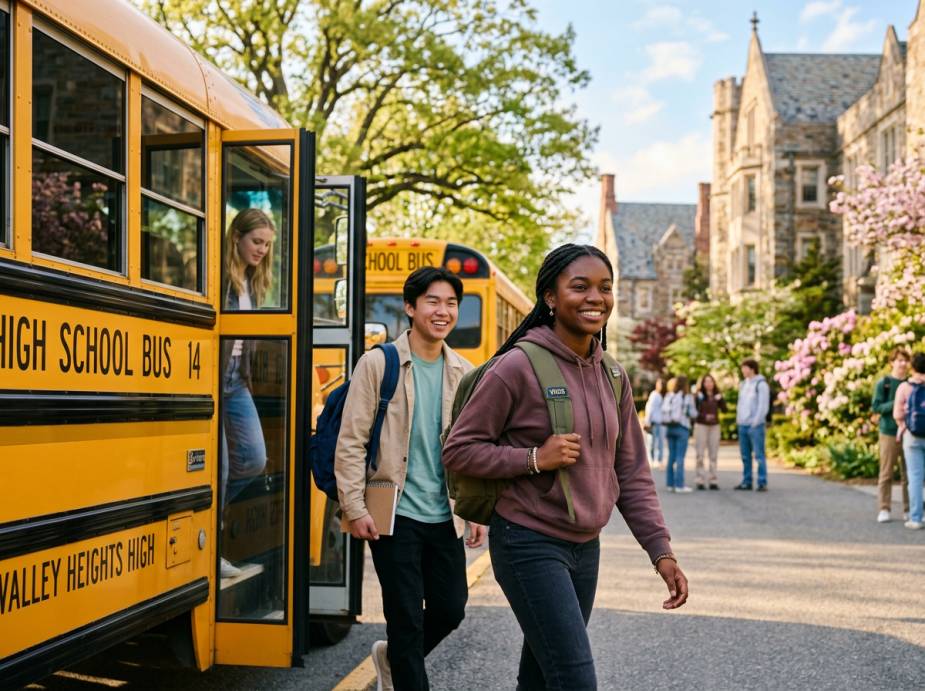
For many years the United States has been the leading draw for students from around the world. They come for world-class higher education, for a school system designed to prepare pupils for the best American universities, and for the chance to build a career in global companies. Lately, though, the picture has been shifting: high costs, a complicated visa policy and growing competition from Europe and Asia are prompting many to reconsider. Even so, the USA remains one of the top destinations for study.
What people come to study
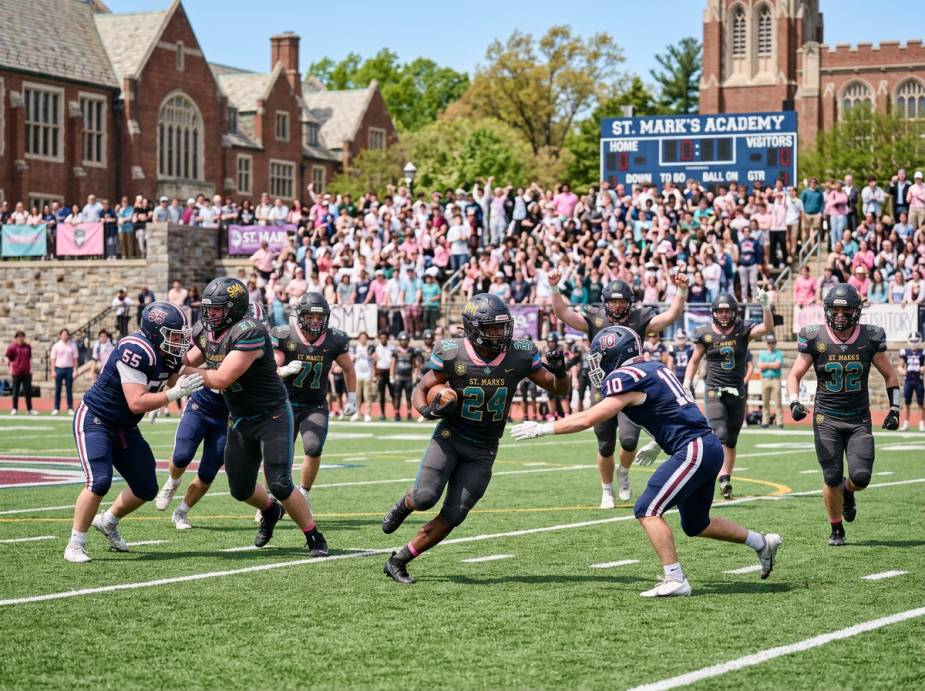
For schoolchildren. American private boarding schools are the route into the country's top universities. The system runs from Middle School (grades 5–8, ages 11–14) to High School (grades 9–12, ages 14–18), and graduates leave with a US High School Diploma recognised by every American university. Many schools offer Advanced Placement (AP) courses, whose exam results some universities count as first-year credits. Where British boarding schools trade on centuries of tradition, American ones are more modern, with a strong emphasis on sport, leadership and extracurricular life. Pupils live in on-campus residences, usually in shared rooms, though older pupils may apply for a single. Most schools sit in the suburbs on huge campuses, with sports fields, swimming pools and theatre studios.
For students. America is still the world's leading host of international students. In the 2024/2025 academic year, 1 177 766 international students studied here, 4.5% more than the year before, making up 6% of all students at American colleges and universities. The largest group came from India (363 019), followed by China (265 919). The most popular fields are STEM subjects (more than half of all international students), business and Master’s programmes, with computer science and data analysis growing especially fast.
What studying here is like
Secondary education. Life in an American boarding school follows a structured routine. Lessons run from morning until lunch, after which sport or creative activities are compulsory, and the evening is set aside for supervised prep. Weekends bring excursions, sports tournaments and volunteering projects. On-campus nurses and school doctors are on hand, and every pupil has an academic advisor to help with subject choices and settling in. Classes are small, 10–15 pupils, so each one receives individual attention.
The defining difference between American and British schools is the weight placed on extracurricular life. Top grades alone won't get you into a good university: you also need sporting achievement, leadership roles in clubs and a record of volunteering. The schools understand this and actively help pupils build that portfolio.
Higher education. A Bachelor’s in the USA takes 4 years and a Master’s 1–2. The system prizes flexibility: students mix courses across disciplines and can even change their major mid-degree. Practical skills and research carry real weight. A hallmark of American higher education is its strong support for international students, with most universities running dedicated offices that help with housing, visas and settling in.
There are two main kinds of university in the USA: private (Harvard, Stanford and MIT among them) and public (the state systems of California, Texas and Florida). Private universities are usually dearer but offer more scholarships; public ones are cheaper for state residents, though for overseas students the difference can be small.
Visa requirements
To study in the USA, international students need an F-1 visa (academic study) or an M-1 visa (vocational training). The process has several stages.
The main requirements:
- Confirmation of enrolment from a licensed institution, which issues Form I-20.
- Payment of the SEVIS fee (Student and Exchange Visitor Information System) — 350 dollars.
- Completion of the online DS-160 form.
- Booking an interview at the US embassy.
- Proof of funds: bank statements, evidence of parents’ or sponsors’ income, or confirmation of a scholarship. The sum must cover at least the first year of study and living costs (often 50 000–70 000 dollars).
- Evidence of ties to your home country (the intention to return after your studies — a formality, but important at interview).
New rules and trends for 2025–2026: in 2025 the administration tightened vetting for students from certain countries, China and Russia in particular. Interviews are now more frequent, and by unofficial accounts student-visa refusals for Russian citizens have reached 30–40%. Proof-of-funding requirements have also been raised: applicants are often asked to show funds not just for the first year but for the entire course.
Timing: it is best to apply 4–6 months before your studies begin. Processing can take anything from a few weeks to a few months, depending on how busy the embassy is.
The pros and cons
Pros:
- Degrees from American universities are prized worldwide and open the door to any international company.
- A flexible system: you can change your major, mix courses across fields and combine a Bachelor’s with a Master’s.
- An enormous choice of programmes, from artificial intelligence to costume design.
- A formidable research base, world-class laboratories and Nobel laureate professors.
- The chance to work in your field during your studies (CPT, OPT) and to stay on for a time after graduation.
- A multicultural environment in which English becomes second nature.
Cons:
- A complicated visa system. Refusal rates for students from Russia and some other countries are high, and embassies operate with restrictions.
- It is hard to stay on after your studies. The H-1B is a lottery with long odds, and immigration policy is tightening.
- Fierce competition: a place at a top university is extremely hard to win, and you need a strong extracurricular portfolio as well as good grades.
- No free healthcare. Insurance is compulsory at 1 500–3 000 dollars a year, and any visit to a doctor costs a good deal.
|
The U.S. News & World Report Best National Universities 2026 serves as the basis for the U.S. national ranking — the most authoritative assessment system for American universities. Unlike global rankings such as QS and THE, U.S. News evaluates universities across 17 indicators of academic quality, with the key metrics being graduation rates, first‑year student retention, and financial resources per student. Below is the Top 10 National Universities in the U.S. according to the U.S. News 2026 ranking. For each institution, we’ve also included their positions in the global QS World University Rankings 2026 and THE World University Rankings 2026. QS places more weight on reputation among employers and the academic community, while THE focuses on research output and citation impact. Together, the three rankings offer a well‑rounded picture: U.S. News shows where a university stands within the American system, QS reflects its perception on the global job market, and THE reveals its research firepower and scholarly potential. |
|||
| Rank (U.S. News 2026) | University | QS 2026 (World) | THE 2026 (World) |
|---|---|---|---|
| 1 | Princeton University | 25 | =3 |
| 2 | Massachusetts Institute of Technology (MIT) | 1 | 2 |
| 3 | Harvard University | 5 | =5 |
| 4 (tie) | Stanford University | 3 | =5 |
| 4 (tie) | Yale University | 21 | 10 |
| 6 | University of Chicago | 13 | ~15–20 |
| 7 (tie) | Duke University | ~60 | ~20–25 |
| 7 (tie) | Johns Hopkins University | ~30 | ~15–20 |
| 7 (tie) | Northwestern University | ~50 | ~25–30 |
| 7 (tie) | University of Pennsylvania | 15 | ~15–20 |
|
Below is the Top 10 U.S. public high schools according to the U.S. News 2025–2026 ranking. The basis for this national ranking is the most authoritative assessment system for secondary education in the United States — the U.S. News & World Report Best High Schools 2025–2026. This ranking covers only public schools, as they form the backbone of the American education system and are subject to uniform evaluation against standardised criteria: test scores, college readiness, performance of different student groups, and other academic indicators. For private schools, there is no single national ranking system — their quality is more often assessed by the percentage of graduates admitted to top universities. |
||
| Rank (U.S. News 2025–2026) | School | City, State |
|---|---|---|
| 1 | BASIS Tucson North | Tucson, Arizona |
| 2 | Signature School | Evansville, Indiana |
| 3 | Central Magnet School | Murfreesboro, Tennessee |
| 4 | Davidson Academy | Reno, Nevada |
| 5 | Thomas Jefferson High School for Science and Technology | Alexandria, Virginia |
| 6 | Albuquerque Institute of Math and Science | Albuquerque, New Mexico |
| 7 | Haas Hall Bentonville | Bentonville, Arkansas |
| 8 | Julia R. Masterman Secondary School | Philadelphia, Pennsylvania |
| 9 | The School for the Talented and Gifted | Dallas, Texas |
| 10 | Aiken Scholars Academy | Aiken, South Carolina |