SECONDARY EDUCATION ABROAD
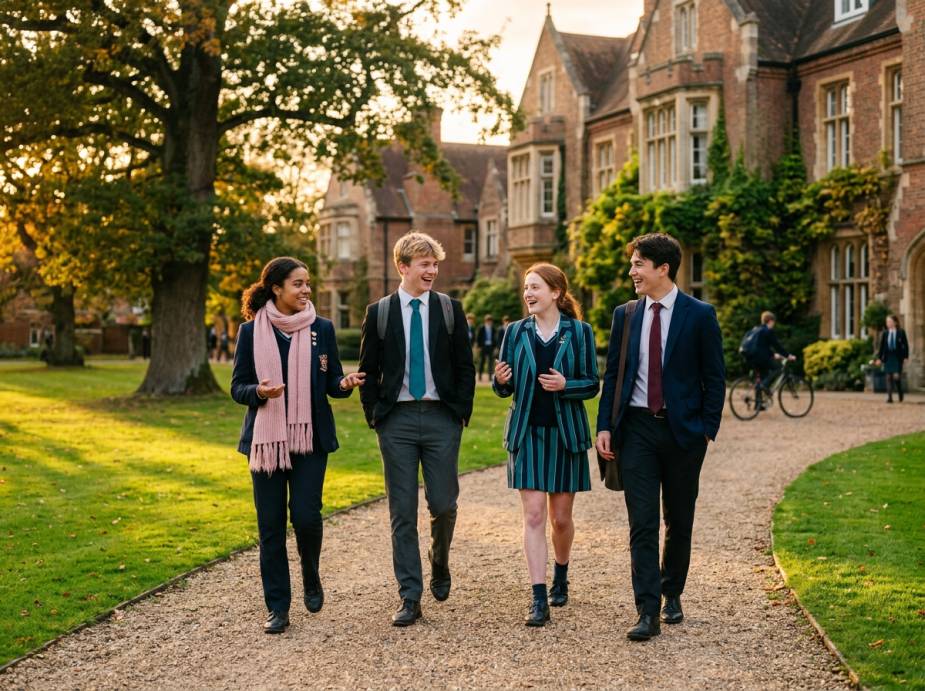
Secondary education abroad is more than just school — it's the first step towards an international career and a place at the world's best universities. Schools abroad offer a unique environment that combines academic rigour with a focus on independence, respect for each student as an individual, and preparation for real life. Studying in another country opens the door to modern teaching methods, a multilingual setting and in-depth careers guidance from Year 8–9 onwards.
One of the key advantages is early immersion in the language and culture. Students don't simply learn English, German or French — they start to think in the language of instruction, which gives them a tremendous edge later, when applying to university and at work.
The second major plus is the range of education systems. British GCSEs and A-levels, the German Abitur, the French Baccalauréat — each student can choose the system that best suits their strengths and plans.
The third factor is the development of character and life skills. Living away from home, managing your own time, taking part in sports and creative clubs — all of this shapes a mature, responsible young adult.Main types of school
- Boarding schools — students live on the school grounds in residences with round-the-clock supervision. The ideal choice for full immersion in academic and extracurricular life.
- Day schools — the child attends lessons during the day and returns to a family in the evening (a host family, or their own if the family has relocated). Well suited to those who value a homely atmosphere.
| United Kingdom (GBP) | from £25 000 | to £55 000 |
| Switzerland (CHF) | from CHF 60 000 | to CHF 120 000 |
| Germany (EUR) | from €30 000 | to €50 000 |
| France (EUR) | from €28 000 | to €45 000 |
| Italy (EUR) | from €25 000 | to €45 000 |
| Ireland (EUR) | from €22 000 | to €40 000 |
| Austria (EUR) | from €35 000 | to €60 000 |
| Spain (EUR) | from €18 000 | to €35 000 |
At day schools, tuition is 30–50% lower because accommodation is not included.
Accommodation options (best suited to international school students)
- Host family — the child lives with a local family, shares meals with them and immerses themselves in everyday life and the language. A great option for settling in and easing into the culture.
- Residence / school dormitory (Dormitory / student residence) — living on campus in rooms for 1–4 students. Full board, supervision by housemasters, and access to sports and study facilities. The most popular choice among senior students.
Other options (rented flats, hotels) are not recommended for school-age students travelling without their parents, owing to the legal and practical complications.
What is usually included in the price (boarding)
-
Academic lessons (at least 25–30 hours per week)
-
Accommodation (residence or host family)
-
Full board (breakfast, lunch, dinner)
-
Study materials and resources
-
Extracurricular activities (sports, clubs, excursions)
-
Supervision and support (mentors, medical centre)