AUSTRALIA
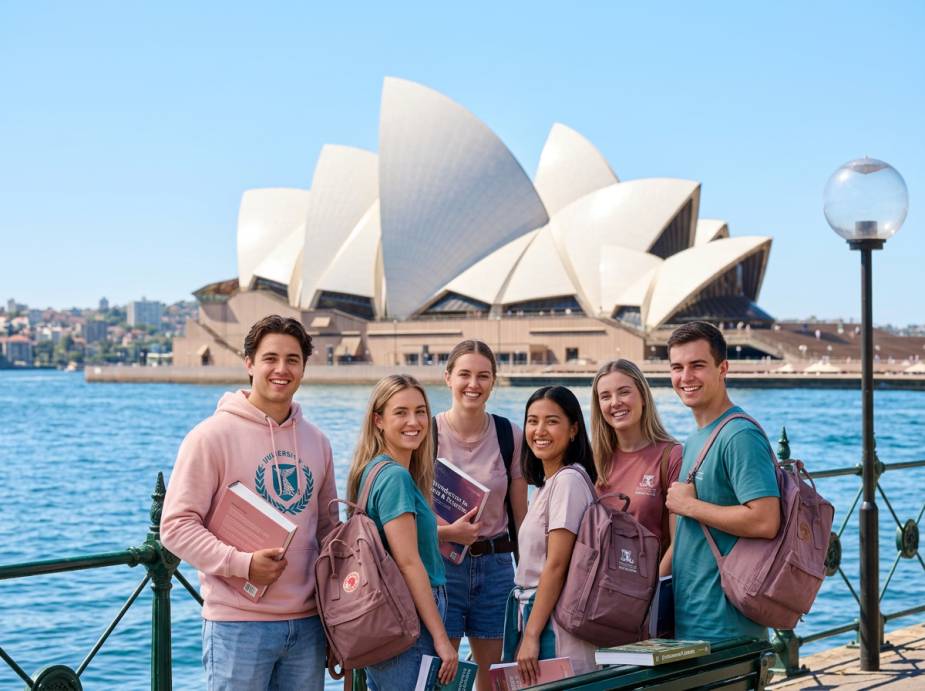
Australia has long been one of the most appealing places to study abroad. A mild climate, an exceptionally high quality of life, strong universities and the chance to stay on and work after graduation draw hundreds of thousands of international students every year. Recently, though, the landscape has shifted: the government has capped the number of new international students, sharply raised visa fees, tightened language requirements and shortened temporary post-study visas. Even so, interest in Australia remains strong, and degrees from its universities are still respected the world over. Since 2024 the government has also brought in a series of laws to protect the rights and welfare of international students, including better support and counselling.
What students typically come to study
For school pupils. Many come to Australia for their secondary education at private boarding schools. The system covers Years 7 to 12 (usually ages 12 to 18). A few schools admit children in the lower years, but such places are rare for international pupils. The academic year is divided into four terms and starts in January–February. Pupils can follow a particular state's local curriculum or the Advanced Placement (AP) programme. The Australian secondary school certificate is recognised by every university in the country and by many universities abroad. In 2026, tuition and accommodation for international pupils at a private boarding school may range from 30,000 to 50,000 Australian dollars. Admission usually requires a language test and an interview or entrance assessment if the child is joining the senior years.
For university students. Australian universities have always drawn international students with their high quality of teaching, comfortable way of life and the chance of a temporary work visa after graduation. A student visa lets international students live and study at every level, from school through to doctoral research. According to 2026 figures, the national intake is set at 295,000 new international students, 25,000 more than in 2025. Given the tightening of migration policy, however, the actual number may come in below that cap. The most popular fields are IT, business, engineering, medicine and nursing.
What studying is like
Secondary education. Life at an Australian boarding school follows a clear rhythm: lessons in the morning and afternoon, compulsory sport or creative activities after lunch, and supervised prep in the evening. Weekends bring excursions, sports tournaments and volunteering. Pupils live in residences, most often two to a room, with single rooms possible in the senior years. Nurses and school doctors work on campus, and every pupil is assigned an academic tutor. Classes are small — 10–15 pupils — which allows a genuinely individual approach. Many schools offer extensive support to international pupils: dedicated English as a Second Language (ESL) classes, advice on choosing a university and help with visa matters.
When a child comes to study without their parents, schools often require them to stay in the on-campus boarding house to ensure their safety and full immersion in school life. There is sometimes the option of living with a host family or an adult guardian, but boarding remains the most popular choice.
Higher education. Australia has two kinds of institution: universities, which offer academic education, and colleges, which focus on practical skills (the so-called Australian Technical Colleges). A Bachelor's degree usually takes three years and a Master's one to two (a research Master's may take longer). A flexible credit system lets students choose courses across disciplines and even change their specialisation midway. Great weight is placed on practical work and research, especially within the «G8» — the «Group of Eight» leading universities.
The academic year begins in February (the main intake) and July (a second one). The country runs the national AQF standards system, which ensures qualifications are recognised nationwide and makes it easier to move between levels of study. International students apply to universities through the Study Australia platform or directly via a university's website. You will usually need proof of previous study (a school certificate or diploma), an English language certificate and, if 11 years of schooling is not enough for entry, possibly a Foundation Year (preparatory course).
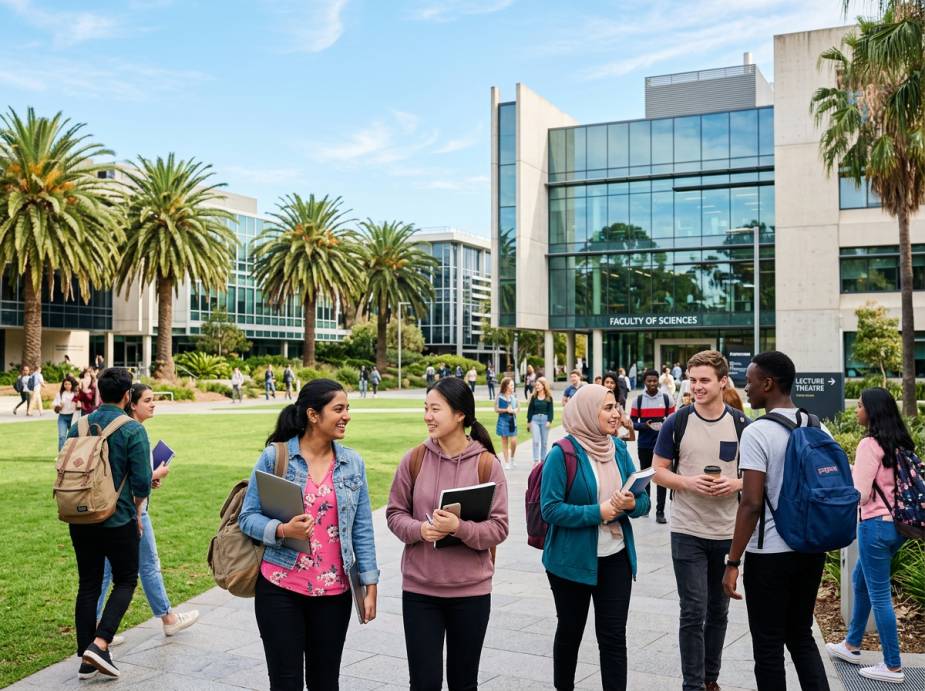
Visa requirements
For studies longer than three months you will need a student visa (subclass 500). The application has several stages.
- Main requirements in 2025–2026:
- A Confirmation of Enrolment (CoE) from an Australian institution
- Proof of finances: you must show 29,710 Australian dollars a year for living costs alone, plus funds for tuition and a return ticket
- English language proficiency: the minimum score has risen to 6.0 (previously 5.5), and to 6.5 for post-study work visas
- Meeting the Genuine Student (GS) criterion — you must explain convincingly why you chose Australia and this particular course, and how it fits your career goals
- OSHC (Overseas Student Health Cover) insurance for your entire stay
Timescales and cost: the processing fee is 2,000 Australian dollars. On average, processing takes 21 days to four months for the university sector, and five to six months for the vocational (VET) sector, owing to stricter GS checks.
Pros and cons
Pros:
- Excellent teaching — eight Australian universities sit in the world's top 100, and their degrees are valued everywhere.
- A favourable immigration policy — after your course you can obtain a temporary visa (subclass 485) and stay on to work.
- A safe, comfortable environment — Australian cities feature regularly in rankings of the best places to live.
- The chance to work part-time while studying — up to 48 hours every two weeks, which helps cover costs.
- A mild climate and high quality of life make the country attractive for the long term.
- After two years' study on a student visa, you can apply for independent immigration through the «General Skilled Migration» (GSM) system, provided your profession is on the list of in-demand occupations (SOL).
Cons:
- Graduate Visa durations have been cut: Master's graduates can now stay two years rather than three, and PhD graduates three years rather than four.
- The high cost of living in the major cities (Sydney, Melbourne, Brisbane). Renting a room in Sydney for one person can reach 500–800 Australian dollars a week.
- The distance from the rest of the world (long, costly flights and large time differences).
- A real risk of expulsion for poor results or breaching visa conditions, such as working more than the permitted hours.
|
The basis for the national ranking is the AFR Best Universities Ranking 2026, published by the prestigious business publication The Australian Financial Review. Unlike global rankings, the AFR ranking is based exclusively on Australian data: student surveys, employer feedback, and graduate tax records, making it the primary reference for those planning to build a career in Australia. This ranking reflects the real standing of universities in the local job market and their demand among employers. Below is the Top 10 Australian universities according to the AFR Best Universities Ranking 2026. For each institution, we’ve also included their positions in the global QS World University Rankings 2026 and THE World University Rankings 2026. QS places more weight on reputation among employers and the academic community, while THE focuses on research output and citation impact. Together, the three rankings offer a well‑rounded picture: the AFR shows how a university is perceived within the country, QS reflects its international reputation in the job market, and THE reveals its research potential and scholarly base — which is especially important when choosing a master's or PhD programme. |
|||
| Rank (AFR 2026) | University | QS 2026 (World) | THE 2026 (World) |
|---|---|---|---|
| 1 | University of Melbourne | 19 | 37 |
| 2 (tie) | UNSW Sydney (University of New South Wales) | 20 | ~80 |
| 2 (tie) | University of Queensland | 42 | ~70 |
| 4 | Monash University | 58 | =58 |
| 5 | Australian National University (ANU) | 32 | 73 |
| 6 | University of Adelaide | 82 | ~90 |
| 7 | University of Sydney | ~25 | =53 |
| 8 (tie) | University of Wollongong | ~200 | ~200 |
| 8 (tie) | University of Technology Sydney (UTS) | ~150 | ~150 |
| 10 | Deakin University | ~250 | ~200 |
|
In Australia, there is no single nationwide ranking of secondary schools. Education is the responsibility of each state and territory, so schools are assessed based on the results of local exit examinations: ATAR (Australian Tertiary Admission Rank), HSC (Higher School Certificate in New South Wales), VCE (Victorian Certificate of Education), and other regional systems. Each state uses its own standardised exams, which makes direct comparison of schools from different regions difficult. However, there are reputable independent rankings that compile and systematise this data. For example, Schools360 evaluates schools across 60 academic and extracurricular indicators, including exam results, performance across different student groups, and university preparation. The Herald Sun publishes a separate ranking of the best private schools. Below is the Top 10 schools in Australia, compiled on the basis of these rankings for 2026, providing a consolidated overview of the country's leaders in secondary education. |
||||
| Rank | School | City | State | School Type |
|---|---|---|---|---|
| 1 | Sydney Grammar School | Sydney | New South Wales | Private boys' school |
| 2 | Scotch College | Melbourne | Victoria | Private boys' school |
| 3 | Melbourne Grammar School | Melbourne | Victoria | Private boys' school |
| 4 | James Ruse Agricultural High School | Sydney | New South Wales | Selective public school |
| 5 | Brisbane Grammar School | Brisbane | Queensland | Private boys' school |
| 6 | Mac.Robertson Girls' High School | Melbourne | Victoria | Selective public girls' school |
| 7 | The King's School | Sydney | New South Wales | Private boys' school |
| 8 | Geelong Grammar School | Geelong | Victoria | Private co‑educational |
| 9 | Haileybury College | Melbourne | Victoria | Private co‑educational |
| 10 | Presbyterian Ladies' College (PLC) | Melbourne | Victoria | Private girls' school |