MALTA
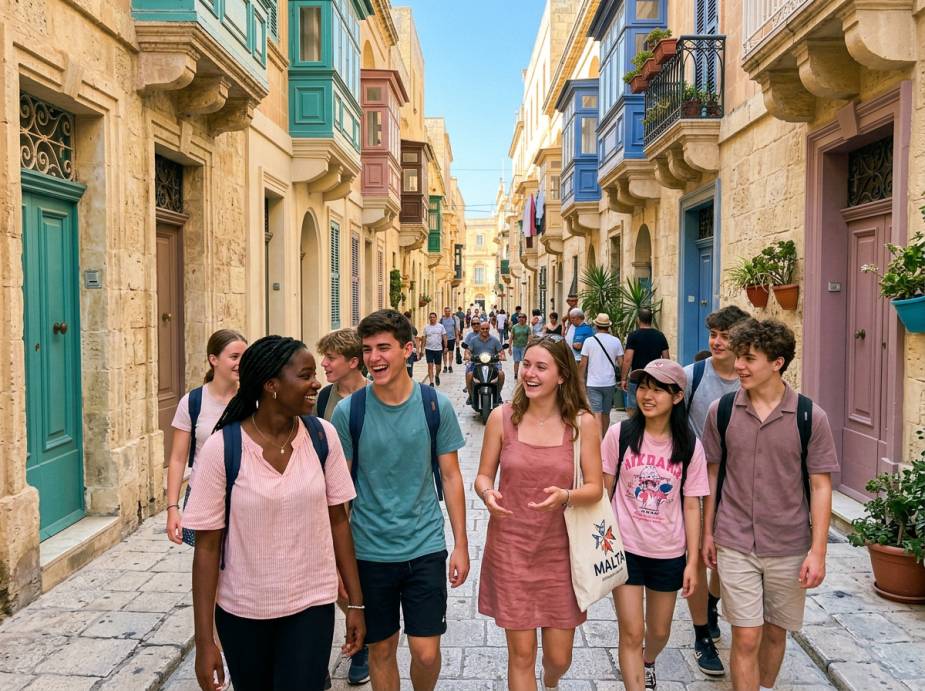
Malta is a small island state in the heart of the Mediterranean that has lately become one of the most popular places to learn English and gain a quality European education. Students come for the affordable cost, the warm climate, the safe environment and the chance to study in English in a country where it is an official language (alongside Maltese). Malta is also a member of the European Union, which brings certain advantages — though not decisive ones for citizens of countries outside the EU.
What people usually come to study
For school pupils. Malta has several private boarding schools that take international pupils from the age of 10–14 up to 18. They follow the British curriculum: usually International General Certificate of Secondary Education (IGCSE) courses in years 9–10 and A-Level in years 11–12. Secondary education certificates obtained in Malta are recognised by all universities in the United Kingdom and by many across Europe. One of the best-known is St. Edward’s College — a private Catholic boarding school for boys (with boarding) that admits pupils from 8 to 18 years old, set in the picturesque area of Birkirkara, not far from Valletta. International pupils can also stay with host families (homestay) — a popular option for those coming for language courses or the academic year. A homestay with meals costs around 700–1,000 euros a month.
For students. Maltese universities attract international students with their low prices and degrees recognised across the European Union. The largest and oldest institution is the University of Malta (founded in 1592), with around 11,500 students, roughly 1,000 of them from abroad. The most popular programmes are in business, information technology, medicine, international relations and tourism. A Bachelor's degree takes 3 years and a Master's 1–2 years. In 2025 the Maltese government launched a scholarship programme for international students from selected regions, covering up to 40% of tuition costs. There is also the Malta College of Arts, Science and Technology (MCAST), which offers vocational education (diplomas and Bachelor of Applied Science degrees), and its graduates are in demand in the tourism and technical sectors.
What studying here is like
Secondary education. In boarding schools and private day schools, teaching is in English following British curricula. Classes are small (12–15 pupils), and great attention goes to the language preparation of international pupils — schools run English as a Second Language (ESL) courses to help them settle in. The academic year begins in September, and the boarding schools sit mostly in the suburbs of Valletta or in the north of the island, close to the sea.
Higher education. The University of Malta runs on the Bologna system: a Bachelor's degree (3 years), a Master's (1–2 years) and a doctorate (3–4 years), with teaching in English. Its strengths are the medical faculty along with economics and IT, and it works closely with European universities on exchange programmes. Admission for international students requires a secondary education certificate recognised by the Maltese authorities (nostrification is often needed) and proof of English (usually at B2–C1). Entrance exams are held for certain subjects (medicine, dentistry, architecture).
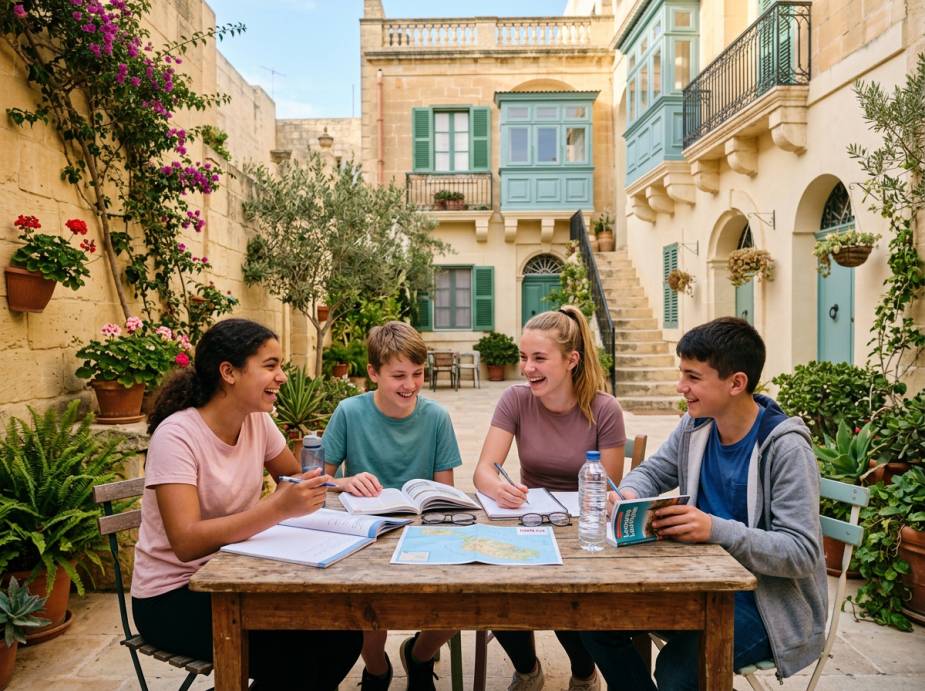
Visa requirements
Citizens of countries outside the EU need a national visa (D visa) to study in Malta for longer than 90 days, followed by a residence permit (e-Residence card). The process runs in several steps.
Main requirements:
- Confirmation of enrolment from a Maltese educational institution.
- Proof of financial means: enough funds for tuition and accommodation, at around 9,000–10,000 euros per year per person.
- Medical insurance valid in Malta.
- A certificate of no criminal record from your country of residence.
- A passport valid for at least 3 months beyond the planned end of your studies.
The student visa grants entry; within 30 days of arrival you must apply for a residence permit (e-Residence card) at the Identity Malta office. Visa processing can take 4–8 weeks, and the consular fee is around 100–200 euros.
Pros and cons
Pros:
- Affordable study and living costs compared with the United Kingdom, the USA or Switzerland.
- English is an official language, which makes settling in easier.
- A warm climate, mild winters and plenty of sun.
- A high level of safety and a welcoming attitude towards foreigners.
- EU membership — a Maltese degree is recognised across all EU countries.
- A simpler visa regime for some categories (the student visa is processed faster than in the USA).
Cons:
- A limited choice of universities and narrow specialisation (there are no technical universities to rival Germany's).
- A small island — it can soon start to feel cramped, short on space and variety.
- Difficult to rent accommodation (high demand, especially during the academic season, and rising prices).
- Transport: the public network is overloaded, and getting around without a car can be awkward.
|
In Malta, there is no single state‑wide ranking of language schools or educational programmes comparable to British or American national systems. However, the most authoritative sources of independent assessment are the international platforms Language International and LanguageCourse, which aggregate student reviews, school ratings, data on teaching quality, value for money, and service levels. These resources are considered the main reference points for choosing language and professional programmes in Malta, especially for international students. Below is a consolidated ranking of the best educational programmes in Malta for 2026, compiled on the basis of data from Language International, LanguageCourse, and other specialised resources. Unlike individual reviews, this ranking summarises the opinions of hundreds of students and objective school indicators, providing a balanced view of the leaders in Maltese education. |
|||
| Rank | School / Programme | Type | Key Features |
|---|---|---|---|
| 1 | Cavendish School of English | Adult language school | Excellence Award 2026 from LanguageCourse; 2nd place in "Best English Language Learning 2025" at the Malta Tourism Awards; operating for about 40 years |
| 2 | IELS Malta | Adult language school | Recognised as the best school in Malta by MaltaEng for excellent teaching, solid reputation, and highest student satisfaction |
| 3 | International House Malta | Adult language school | 10 reviews on Language International; offers an intensive course of 30 lessons per week; individual approach to each student |
| 4 | EC Malta | Adult language school | Global network with 18 branches; ISO 9001 pioneer; ST Leading Star 2025 award; specialised 30+ courses |
| 5 | Berlitz English Language Academy (ELA) | Adult language school | Founded in 1988, founding member of FELTOM; offers CLIL courses for teachers and a 50+ programme |
| 6 | inlingua Malta | Adult language school | Part of the international inlingua association with 50 years of experience |
| 7 | Maltalingua School of English | Adult language school | Small classes, students from 40+ countries, high teaching quality |
| 8 | Gateway School of English (GSE) | Adult and teenage language school | Family‑run school since 2002; prices from €100 per week; summer programmes for children and teenagers |
| 9 | EC Malta (Junior) / Sprachcaffe St. Paul's Bay (Junior) | Summer camp for children and teenagers | Safe location conducive to learning; combines lessons with excursions and outdoor activities |
| 10 | Berlitz ELA International Summer Camp | Summer camp for teenagers aged 13–17 | 2‑week programme in July–August; interactive general English lessons in a fully English‑speaking environment |